A couple of years ago, we were planning a vacation to Munnar, known as the tea country of the south. Dotted with rolling tea gardens and surrounded by majestic forests, Munnar has a calming influence on all visitors. Suddenly, an idea struck. Why not visit the place where I spent close to six years of my childhood (perhaps more if you exclude the baby years)? After all, it is only a two hour drive from Munnar. Plans got reorganised accordingly and we decided to visit Idukki and Painav as a day trip, sandwiching it as a stopover between Munnar and Kochi.
An early morning departure from Munnar was warranted and an able Sarathi (meaning driver) and a Chariot (A Toyota Etios) were organised. On the winding roads from Munnar to Painav, my mind drifted back to the past. There is an inherent joy in day dreaming, especially recollecting memories from the past. Mine was set in a pristine forest town, which was to be overrun by a developmental project – a vary large hydroelectric project to make electricity for the state.
My day dream
We probably moved to Idukki, when I was a year old. The house that we lived was spacious with a garden in the front, a side yard, space at the back and a garage. It had two bedrooms with attached bath and a not so big kitchen. The store was dingy and bereft of any ventilation. We had independent living and dining and a study (which was converted into a pooja room in our case). The building material was largely granite, with asbestos roofing and asbestos partition. (This was probably the era before asbestos was banned). The painting was largely lime and as far as I can remember there were two colours one was sky blue and the other green, a lighter forest green.

The garden in the front had a nice walkway, leading from the wicket gate all the way to the main door. The walkway was nicely separated with concrete blocks, the ones that get discarded after testing at the lab. They were in two shapes one cylindrical and the other a cube. The small patches were home to the cubes while the central walkway was occupied by the cylinders – we never thought of painting them, so both had the same ashen look. We always took pride in our front garden, a delicious bouquet of colours and scents welcomed any visitor – roses, bougainvillea, marigold, hibiscus, chrysanthemum, buttercups, sunflower, jasmine – the only thing missing was the daffodils! All of them were painstakingly looked after, right amount of fertiliser and pesticide and water of course when it did not rain! The senses always got a blast with the waft of perfume cooling the heart and the contrasting colours, a treat for the eyes!
It rained for four to six months of the year. The weather was very pleasant for the remaining. Rainbows made a frequent appearance, perhaps wanting to be noticed more often than the flowers, perhaps! On a clear night (when I say clear, I mean cloudless- the air was always clear with zero pollution), you can see lights from a township (Chithirapuram) about 50 kms away. They were like fire flies dancing away at a distance.
The back yard was devoted to vegetables and fruits. We grew the usual stuff – chilli, lady’s finger, tomato, brinjal, tapioca and some unusual stuff ie cabbage and pineapple. Tending to these living things was part of growing up, seeing them flower, produce and sometimes die of insect attack!
The reptile variety had a field day, you would find snakes in the garden and rodents burrowing to steal the tapoica, and one in pursuit of the other. While the crickets chirped away all night, the early morning wake up call was from the roosters so fondly being raised by our neighbour.
Talking of neighbours we had three in the immediate neighbourhood. The house on our left was home to three boys, the one on our right by two girls and one behind (were the roosters live), by my classmate ABY. But friends did not end there. There were school friends of course and then there were friends who you see only during summer (some of them went to boarding school). And where do we hangout?
– The school, a good five minute walk from home, was the most obvious meeting place. It had all of five rooms, two pucca ones and the third a larger room with two partitions where grade one to three classes were conducted, the first pucca room was for the seniors ie grade four and the last room was the staff room. Two large open verandas ran on either side which also served as the exam hall (to achieve social distancing). The school had a total strength of about 60 and five teachers including the headmaster. The common adventure during recess was to catch a dragon fly and make it lift a small stone. Sometimes, a few of my friends went hiking on the small hillock adjacent to check whether lemons are ripe for plucking.
– The park was strategically situated half way between home and school. With a couple of swings, see saw, a slide and a large banyan tree. This served as a pit stop during lunch break or on the evening walk back home. We ran after little squirrels, etched our names on the bark and generally had fun.
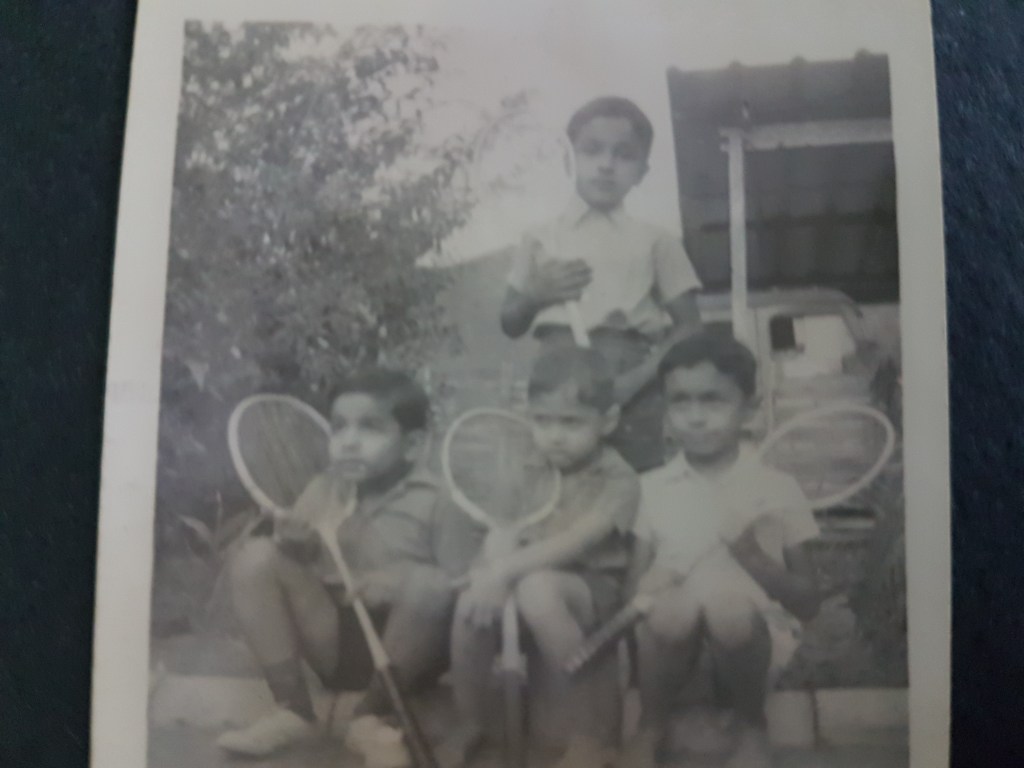
– An indoor badminton court, situated next to the school was the next hot spot. Typically available till six pm, before the grown ups took over, it had a high roof, cement flooring and proper lighting and was indeed a blessing. Four of us were regulars smashing around with wooden rackets.
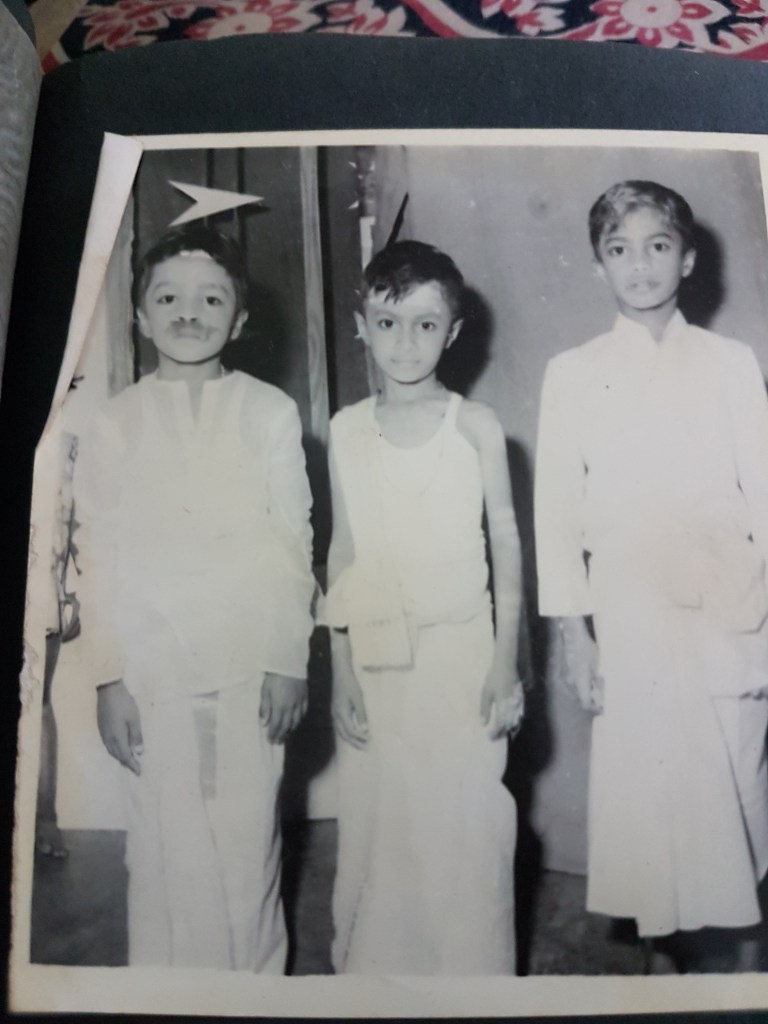
– Cultural activities in school was largely limited to the Independence Day [group singing of Vande Mataram and the National Anthem] and another one close to the end of the school year. This brought together students from across grades. I tried my hand in a full scale drama, where my serious character became a comedy and I had the crowd in splits! [Acted as an old man with a thick moustache, which came unstuck in the middle of the show – the curtains had to come down twice for the make up man to rectify the damage]
– Family parties happened many days in the year, where four to five families and their children met. The general focus of attention was on food and some outdoor games. I always looked forward to an outstanding dessert, auntie’s lemon grass soufflé!

We had for a substantial period, two vehicles. The first was a Standard 10 car, perhaps the first in the long line of vehicles produced by Standard Motor Company Chennai (Followed by Herald and finally the Standard 2000). The second was a Willys Jeep, an ugly duckling in grey, with open seating and perhaps more fit for the mountains than the 10HP beauty.

The ride in the Jeep was nevertheless more hair raising and was the preferred mode for drives to the project site while the car served the long distance run sometimes to Trivandrum. Neither let us down. The standard 10 even survived a minor scare of an accident. I also, distinctly remember the crank rod used to start when the choke start failed. How different from the automatic push button starts that we have now! The garage had the usual tools for the car and also fertiliser bags and pesticides.
The small road in front of our house sloped gently downwards towards the park and beyond to the school. Once you stand in the front yard, you could see a tall mountain close by with a winding road leading to the top. Up on the top was the town dispensary. One pass time was to track the trajectory of a jeep slowly going up the hill to the dispensary or to a house up there. The mountain seemed mighty and the road to the top treacherous.
At least once a month, the daddies played a full length cricket match, all dressed in whites and in full gear. Never understood much about the game then, other than the fact that there was a ball which had to be hit. Ball badminton and volleyball were the other two favourite games the ladies indulging in the former.
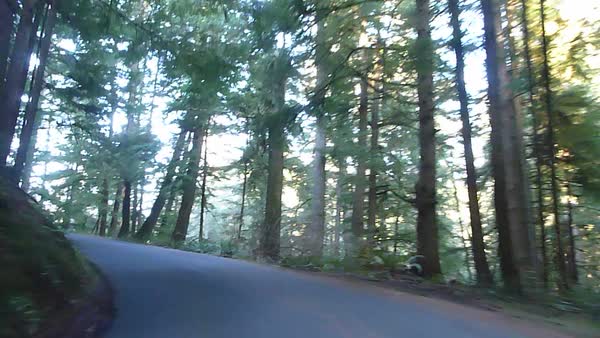
Long walks were reserved for Sunday evenings, when I say long it was for about five kms. You go down all the way to the junction where you meet the national highway, which is the road leading from the foothills to the upper mountain reaches and then walk along till you feel tired and ready to turn back. With hardly a soul in sight, dense forest on either side and thunder in the distance indicating an approaching storm you would think it was a bit creepy – but the walk was without fear and the joy of being with the abundance of nature can only be experienced.
Movies was another thing to look forward to. There were two theatres at a distance of about five and ten kms from home. Invariably the folks preferred late night shows. One had thatched roof and the other a more solid one and perhaps bigger. We always got the rear seats with cane chairs with hand rest. The crowd in the front either sat in benches or on the floor. For me, more than the movie was the opportunity to sneak into the projection room and get a gift from the operator of a few reels of film. These collections used to be inspected, stored carefully and shared with friends as well.
Vegetable shopping was at a market near the T junction, near one of the theatres. road side stalls used to sell fairly fresh produce and lots of bananas – the king of fruits in that part of the world! For grocery shopping there was a departmental store, which stocked all necessary items – an older and a mini version of the modern Big Bazaar or Nilgiris.
The centre of communication with the outside world was the post office. Whether in sending ordinary letters in the inland letter form or in covers or to send money to someone in need, the staff at the post office was always helpful. It was fun to watch the postman stamp letters before they were dispatched and when he sees some of us looking at his work, his speed would invariably double. Stamp collection naturally became a hobby.
Sarathi’s booming voice interrupted my dream. “Sir, we are five minutes away. Where do you want me to go?”. The time was 10 am. I felt like the green sea turtle returning home to hatch, after roaming around the world!
Reality Strikes!
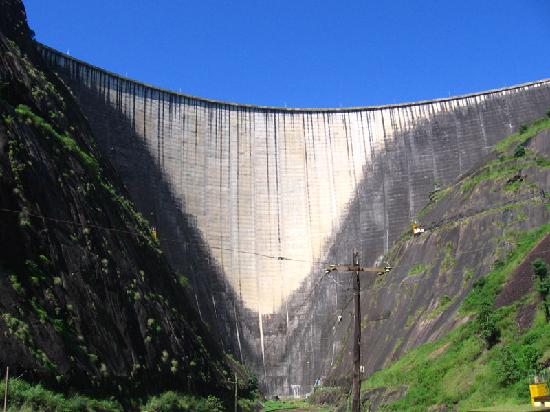
I told Sarathi to head to the Engineers’ office in Vazhathope. Hopefully, a visitor pass would be waiting for us to visit the Dam. The man in charge was a bit late, so we decided to move to the IB (or the Inspection Bungalow), often a resting place for Engineers & families in those days. The place had a deserted look, the only thing I could recognise was the iron gutter guard (which allows humans and vehicles to get in while keeping animals away from the compound). A quick visit to the rest rooms and we were ready to revisit history.
We arrived at the dam site about 11 am, the giant concrete structure on one side and the vast reservoir on the other. The place was bereft of any activity in those days it was a place of action, the one common purpose which united the folks. Concrete mixing machines, rail cars, dumpers, overhead bucket trolleys, men in boots and helmets have now been replaced by a majestic beauty holding tonnes of water, as if she does not care about history!

Back to the town, we passed the T Junction. The vegetable market had been overtaken by commercial wants – mobile shops, a lodge and restaurants, cloth merchants, hardware stores etc. The T junction remained intact, but the bus station had moved to a reclaimed land from the erstwhile river. At a distance, I could catch a glimpse of Greenland Cinema and the steps leading upto it. Movies are still part of the changing scene!
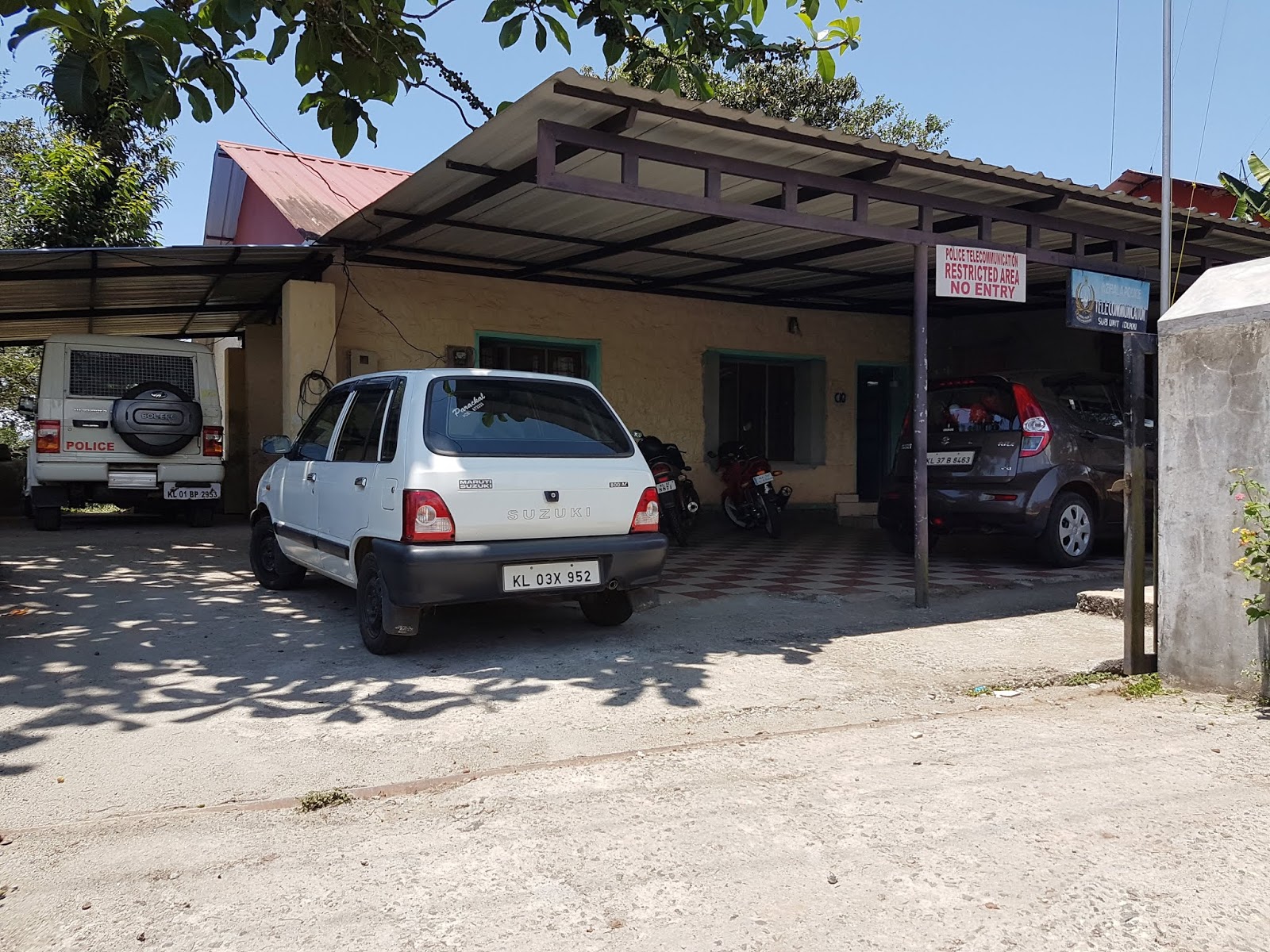
Our next stop was at Painav. We drove past our house a couple of times, since the house appeared to be an office of sorts, creating some doubt in my mind. Our transgression quickly attracted the attention of the guard in the office. He came out and stopped our car thinking that we were some sort of spies. A couple of short sentences in Malayalam, seemed to convince him that we were blood relations. The manager then let us into our erstwhile home. The garden had become a parking space for motor vehicles. On being given a tour of the house, the only place left untouched was the erstwhile kitchen!
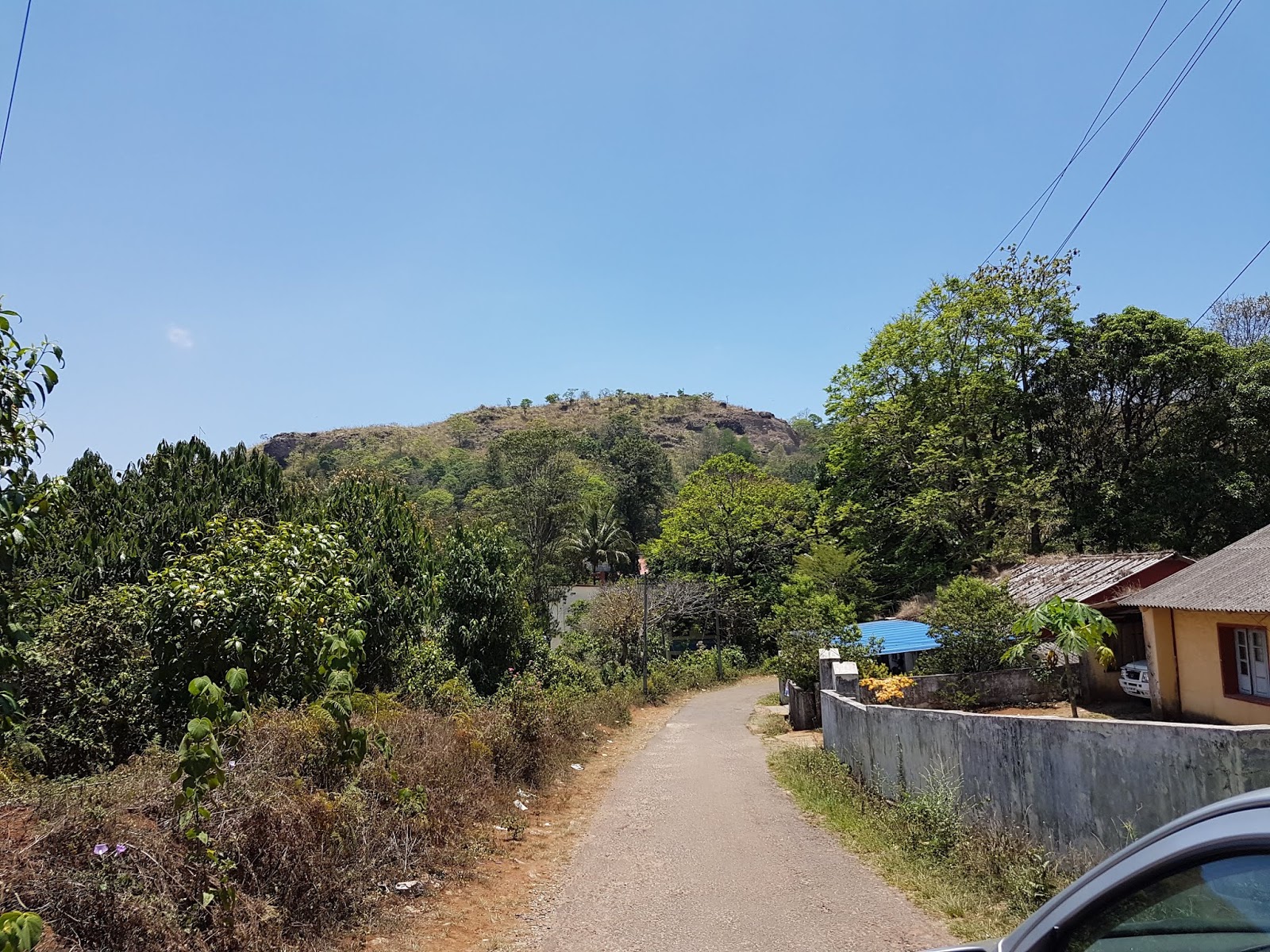
The wide road in front had suddenly become too narrow, the mountain with the dispensary on top had shrunk in size (perhaps with with age), the park had the instruments of joy, but joy itself was nowhere to be seen.


The school looked more commercial with an additional roof perhaps to accommodate an expanding population and a gate to keep out visitors from the past. The road to the departmental store was recognisable, but has been more or less overtaken by a motor garage. Lack of attention, perhaps left the indoor badminton court standing, as an ode to past memories.
Was it worth?
It was afternoon and time to leave for the rather long drive to Kochi Airport. I was overcome with sadness and disappointment. I guess, this was simply because the visit did not recreate the long cherished memory of my childhood. My wife was detached and therefore, more practical. “I would never go back to a place”, she said. Back on the road, I was trying to figure out what was going on.
Memories, I guess, are composed of multiple ingredients – there is the physical aspect for sure like the school or the park or the house. But more than that the people and the events make for the experience. And finally, it is set in a particular time and context. In my case, there was a common purpose, no distractions for anyone other than the purpose. And therefore lot of quality time was spent with each other. And of course, we were in at an age where impressions are formed easily, the perspective is provided by you as you are the person imbibing this experience.
What I was trying to do was to recreate the magic with one ingredient! Plus I tried to squeeze in a six year memory into one half day! To expect anything other than disappointment was a given. What was I thinking?
The only way to recreate the experience is to go back on a time machine (As Calvin does sometimes with Hobbes). Practically the closest to a time machine is to assemble together a group of people who have experienced the place in the same time as you have and spend at least two or three days together. Hire a house, live the place, watch a movie in the theatre, recite stories, go for a walk, etc. And be clear that this may still not recreate the magic, simply because perspectives have changed. Sometimes, certain things are best left in memory and best not revisited!
Settling Down!
And looking ahead, the same philosophy should apply when opting for a place to settle down. Nostos, as described in greek literature has a literal meaning “coming home”. There is the story of the Odysseus, undergoing great perils to return home to Ithaca, after the battle of Troy. Consider, Saudade, the Portuguese description of longing to return to something dear also has a similar undertone. It is human nature to go back to our place.
But, just because you were born in a town or lived in some place 20/25 years ago does not make it a natural place to go back to. Any place other than your current place of living, would be a new experience, despite apparent familiarity. Things remain the same only in memories. Prepare to be romanced anew and prepare to give time to become familiar. If you have to pick between a place and people, always pick the place where you know people. I am sure the place will align itself. Eureka, I seem to have found an answer to a often asked question “Where do you plan to settle down?”!
As Shoshana Zuboff writes ” Home is where we know, where we are known, where we love and are loved”. She continues, “Home need not always correspond to a single dwelling or place. We can chose its form and location, but not its meaning”.
 Anubhavarasa