Which is the most important room in the house? For some it is the living room, for others the study and from some others it is the bedroom. It is ironical that very rarely we come across someone extolling the virtues of kitchen as the centre piece of the house. I think there are many reasons for this and I venture to outline a few of mine to begin with:
1] The decision to buy or rent the house is invariably a male bastion and he rarely steps into the kitchen. There are always exceptions to this general rule, though!
2] It is possible that both the husband and the wife are working full time and the duties of the kitchen are outsourced to a cook – both of them rarely step into the kitchen. As long as tasty food is on the table, who cares about conveniences in the kitchen!
3] Builders and architects want to maximise the show element in a given area of the house or apartment. So if you are constrained by area or budget, the villain becomes the kitchen. You see double ceilings and lavish living or bed rooms co existing with a dingy kitchen, thanks to this parochial thought process.
We have moved houses not less than eight times, and visited innumerable others both within India and outside. Our focus of what makes a house ( I am talking of the inside) is a good kitchen – whether we are seeing the place to live in or as a visitor. So, in addition to looking at house layout, ventilation and overall design, the kitchen ranks really high up in our decision making matrix. And we would happily reject a house only for the thoughtless kitchen design! The design of the kitchen and its upkeep also tells us a lot about our hosts! (Beware when you call us next time)
So, what in our experience makes a good kitchen. I would like to answer this in two parts:
Part 1 : Elements of kitchen design (this blog)
Part 2 : Gadgets that you need to have in the kitchen (the next blog)
We live to eat, and so the place where food is cooked has to be sacrosanct. I have identified a dozen elements of kitchen design for you to consider.
People don’t want to buy a quarter inch drill. They want a quarter inch hole
Theodore Levitt, Harvard Business School Professor
Prof Levitt, was of course speaking about customer centricity in marketing (of products and services) and I would go ahead to say that this principle should apply in any aspect of design. My dozen elements have been identified with a view to provide the energy or the lift for a home chef, at least that is what I would like you to believe!
1] Shape of the kitchen
The shape of the kitchen determines the ergonomics of what all you can do. Although this is number ONE, on my list, the final shape could change based on what all one wants to accomplish in the kitchen. Anyway this is a good place to begin.

There are primarily two types of kitchen shapes. One is a parallel kitchen and the second is a “C” type. (note: Not a curved C, but three straight lines to make up a C!!). There is a third design which is an “L”. I do not approve of this and therefore will not discuss it here.
The C is for large houses or apartments, where budget or area constraints do not exist. If designed correctly, it can also provide for a breakfast bench on one side. An island in the middle is another possibility. So, big budget means a C design.

If you are looking for something functional when faced with space constraint, the parallel kitchen is the one to go for. This very efficient kitchen typically has two parallel platforms running from one end to the other. Ideally the space between platforms should allow two people to work without coming in the way (This means at least a meter and a half spacing). And the platforms should be long enough to make it gadget friendly.
2] The golden triangle
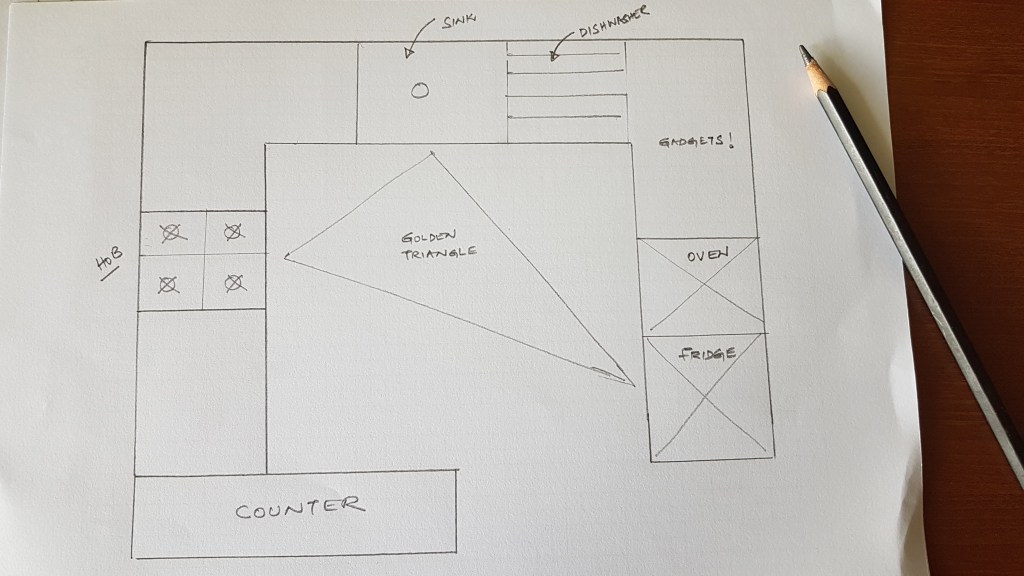
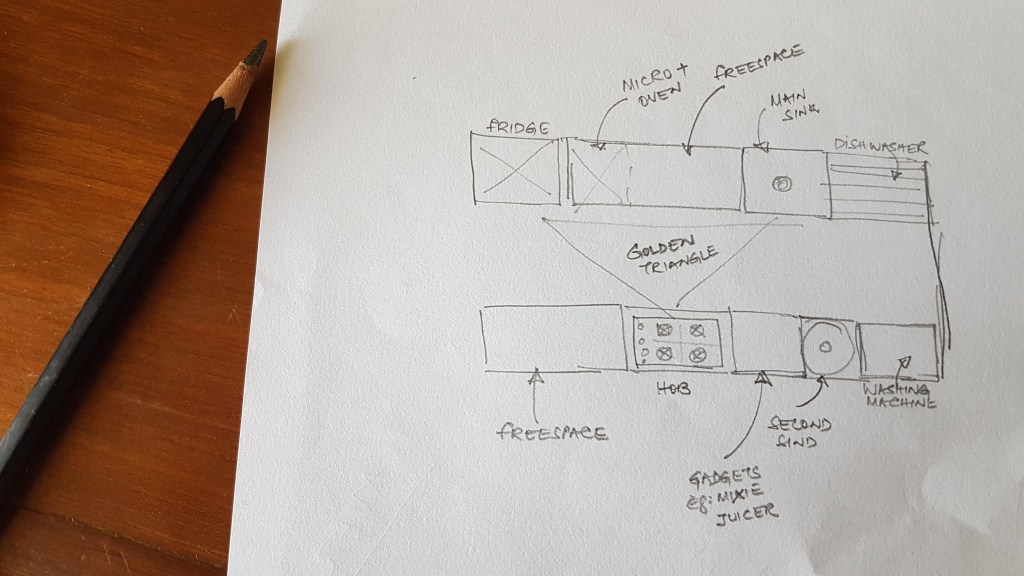
The Jaipur, Delhi, Agra of the kitchen constitutes the fridge, main sink and the hob/cooking platform. These three points represent the high traffic nodes. Therefore they should be close enough, but at the same time spaced out. In a C kitchen each of them can be in one of the three limbs, whereas in the parallel kitchen we can have the hob and sink on the same side or the fridge and sink on the same side. Clearly, all three should not be on the same limb!
3] Number of sinks
We love a two sink philosophy. One is the master sink with a drain board and the second a subsidiary which can be used to wash vegetables. In a parallel kitchen, each limb would house one of the sinks with the subsidiary sink on the same side as the hob. In a C Kitchen, it is perhaps useful to have the subsidiary sink very close to the hob on the same limb. A swivel tap with adjustable nozzle is another great idea for the sink.
4] Storage
This is a tricky and controversial topic. First of all, gone are the days of a separate pantry or “store room”. Second, the master of the kitchen always has his or her preferences as to how much storage is required (for some it is always a case of not enough) as well as what should be where.
If I go back to the house where I have lived the longest, in the initial years storage and kitchen area was completely segregated. So you store things in the store room and vessels in a shelf and you cook in some other part of the kitchen (and you eat on the floor). With sizes coming down, optimising storage in an efficient manner has become an art. Space and accessibility which improve the efficiency of cooking is the most important criteria when designing storage.
A good starting point is to categorise all the things that should find a place in the kitchen (a) Condiments including salt and pepper (b) Glass ware/Crockery (c) Utensils (d) Liquids like oil, vinegar, honey, ghee (e) Ladles and Spoons (f) Cookware such as Skillets, Pans (g) General Storage for items of frequent use (include Snacks such as Chips, Biscuits, Bhujia!) (h) General storage for Staples (Rice, Wheat, Dals etc) (i) Storage for Soaps, Detergents and other Chemicals (j) A smart book shelf for cook books (The iPad is making this redundant very rapidly) (k) A cloth rack for cleaning clothes, gloves, aprons and the like (l) Storage for items not used daily such as Mixie, Chopper, Toaster etc. It is also customary to have a category called others where items which are rarely used are put away (Eg: A vermicelli or pasta maker or a second pressure cooker!).

Once you categorise, the it is all a question of space and positioning. The most frequently used category must be placed in an easily accessible place (Eg: Ladles and Spoons next to the hob and so too the condiment and liquids rack). The chemical rack should be as far away from the heat as possible. The other thing to keep in mind is what is required at the eye level (ie above platform level and what is below the platform level). Ideally, glassware, condiments and Staples should be at eye level and so should be the book case, whereas ladles and oils could be accessible just below the counter close to the hob.
5] Location and Space for Gadgets
The next important decision is to make space for all the gadgets. Some people are gadget freaks while others limit the requirement to what is essential. (For example: Is a fresh juicer, a grinder or coffee maker essential?). The bare minimum gadgets which are used daily should have a permanent place. I would count the following as essential in the modern day kitchen – Fridge, Dishwasher, Washing Machine (unless this can be housed in another part of the house), Microwave and Oven. Rest of the items can be floating with a storage space and a common place to use, earmarked.
6] Electrical points and water/waste outlets
These need to correspond with the gadgets on the show. See my next blog on Kitchen gadgets. With electricity supply erratic, modern homes are equipped with back up supply. The key thing to note with electrical wiring design is to ensure that the back up supply, services both the Fridge and at least one more point where a water heater (for eg) can be plugged in. Water and Waste Water outlets have to correspond with the gadgets in use (Eg: Water Purifier, Washing Machine, Dish washer, Heater etc)
7] Free Platform space
Platform width in the kitchen has now become standard, based on gadgets, so it is 24 inches wide and 34-36 inches tall. Based on our experience, a no gadget platform space of at least 60 inches on either side limb of the parallel kitchen is absolute minimum. The one close to the sink would be useful for cutting vegetables, prep work etc, while the one closer to the hob would be useful for assembly of ingredients while cooking. Do not compromise on this space. Doubling this space to be also used for gadgets such as mixie, microwave can affect the effectiveness of a serious cook.
8] Natural Light and Cross Ventilation
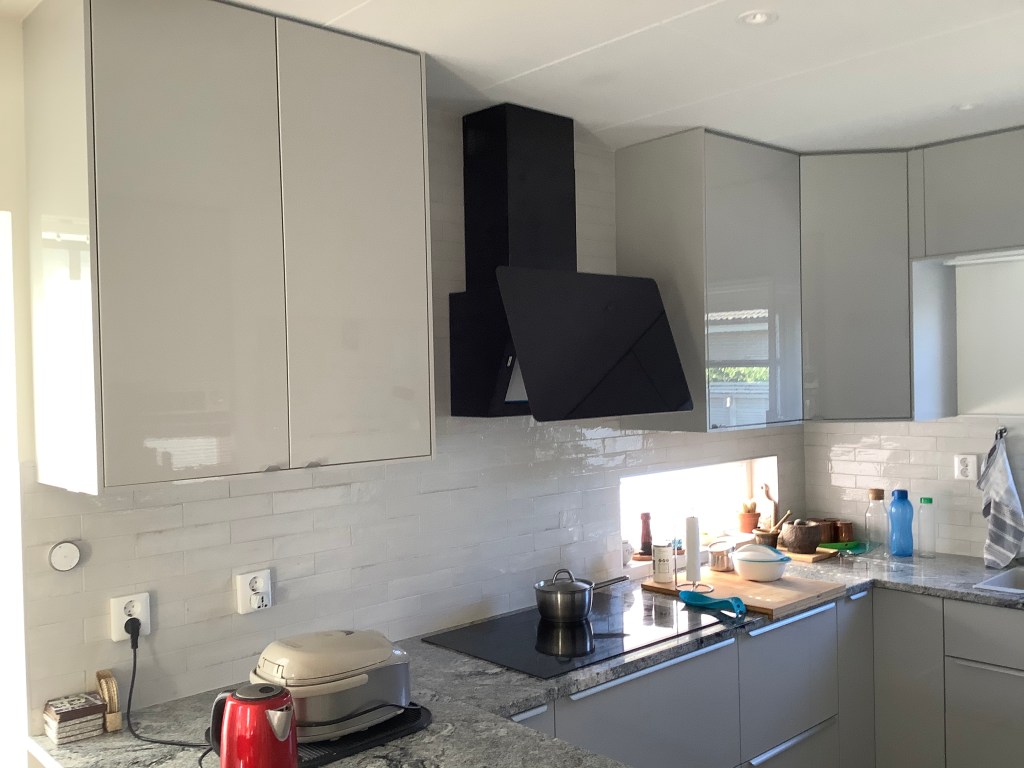
This is a no compromise zone. Imagine having to use artificial light every time you enter the kitchen. Not only does poor natural light provide the right atmosphere for bugs of all kinds, the dingy feeling does little to lift the spirits. Ideally, good natural light should float in from one side. If the doors are on the opposite side, it provides a very good cross vent as well.
9] Air-conditioning vs Fan
Indian climate is not conducive for a long innings in the kitchen. The fan has a fundamental disadvantage while cooking as it affects the efficiency of the burner. If you can afford it, go for an aircon in the kitchen as well. The fan can be a supplement to be used for drying the floor or during non summer months.
10] Open or Closed
Unless, there is a powerful exhaust, my advice is go for a closed kitchen. Yes, there is a temptation to show off with an open one, but this results in reduction in some useful storage and you are open to prying eyes. However, this is a personal choice.
11] Flooring
Kitchen flooring has to meet a number of critical requirements, chief among them are 1] Ability to withstand drops and spills 2] easy to clean 3] non slippery and 4] easy on the knees. We have not had any experience with wooden, bamboo or cork floors [these seem to be the new norm in the west]. The ideal flooring for us would be one with a hard floor eg: granite or vitrified tiles (rough and not smooth). In places where we tend to spend a lot of time standing ie in front of the hob or the sink, we have placed mats to provide cushion to our legs!
12] Herb Garden

If you have the space, do provide for a small herb garden in the kitchen itself. You can grow micro herbs as well as Basil in the kitchen. Your ability to elevate the dishes with a sprinkling of fresh herbs will pay for the added inconvenience. Do give it a try.
Now that we have the place sorted out, we need to deck it up. I will explore the gadgets you need in your kitchen in the next piece.
 Anubhavarasa