It was definitely not a one night stand. Neither was it a life long affair. What do you call something in between? Yes, it was love, blowing hot and cold.
It all started when I was young, year 1973. Too young you would think. We stopped at a mid way town on a long road journey. I accompanied my dad to the small shop. The shop keeper was showing him a box. I never got interested till we unwrapped it at home. That was the beginning!
This post is about my love affair with cameras through the ages, with a few life lessons. Hope you will read on!
Agfa Isoly 1
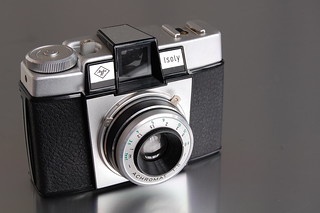
Inside the box was a black beauty. Very sleek, a sturdy body and German precision written all over. The camera was called Agfa Isoly I, made by a company called Agfa Gevaert. It was obviously a film camera (digital was unheard of) meant to spew out black and white photos (4cm*4cm prints). Dark room film loading was the norm, and each reel produced, well stunning images. The settings were also very simple. A push button at the top was meant to open the shutter and expose the film. A dial to move the film forward and a couple of settings for aperture and multiple manual settings for adjusting the focus. The back of the camera had a small window through which you can read the film position (numbers 1 to 16). Once you reached the end, you manually rewind the film back to the original spool before opening the back cover.
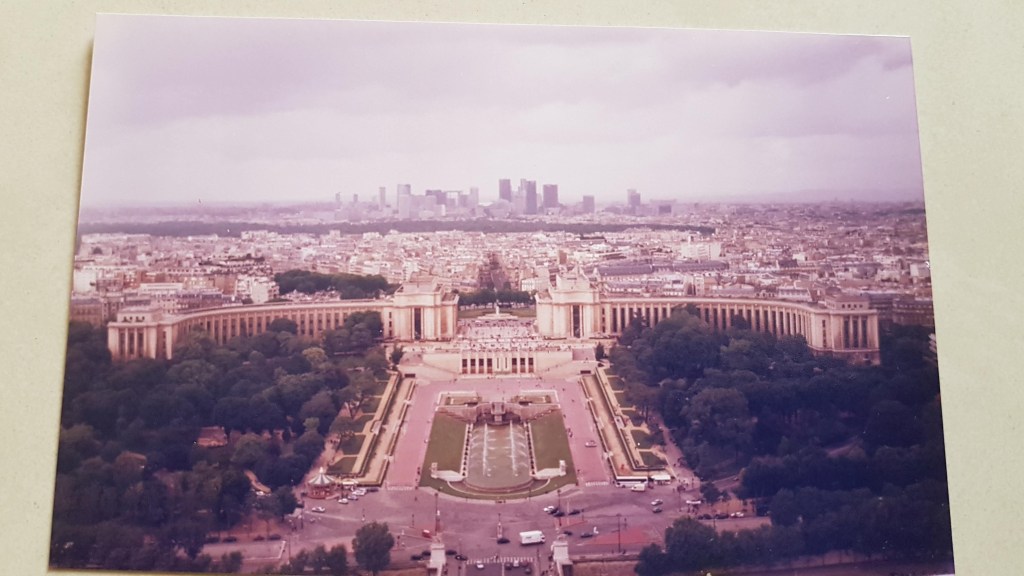
We guarded it like a baby and it travelled everywhere. Here is a sample. I will add more pictures when I rummage through the archives.

I am not sure when we bid goodbye and what we did with the camera in the end. It probably lasted at least 10 years, would be my guess.
Kodak Kroma

This came as a surprise Diwali gift from my Company. The year was 1994. It was compact and easy to shoot. Really no fuss, no adjustments required for focus, in that sense inferior to the Agfa. There was a built in flash, a lens cover and three ISO settings (100, 200 and 400). Load the ubiquitous KODAK film plus two batteries to operate the flash and you are ready. Except for the fact that it used to deliver colour pictures, the film loading and unloading sequence was similar to the Agfa. And, of course the studio could deliver standard size pictures or blow it up.
I always used Kodak Gold film with ISO 100 rating. Looking back, marketing the film as GOLD is clever, is it not? Very rarely bought a ISO 200, although it can capture low light better. In any case the throw of the flash was hardly a meter, anything beyond that would have been dark!
This one worked like a perfect accompaniment for most outdoor occasions. Birth of our first child, many trips back home and yonder. While not glamorous, it did its job. And with very few parts, nothing could really go wrong!
Canon IXUS Z90

Sexy! One word to describe this compact. This camera used APS film, made by Kodak. The APS film defined the fork in the road, and Kodak took the wrong turn. History says that while Kodak invented the digital camera way back in 1974, the management had its head in sand – “It is digital photography. Cute, but do not tell anyone about it”.
We were on our first overseas family trip to Singapore. The year was 2000. Shopping at Mustafa was part of the agenda (tell me one Indian who has been to Singapore but not visited Mustafa!). The store had everything under the roof including cameras. There was debate as to whether to buy film or digital. I guess the Canon Power Shot (digital) was available. But there was an inertia to leave the tried and tested. Also, perhaps the price of digital was higher than that of film.
I think what won the debate was the beauty of the camera itself! And, some smart sales talk by the man behind the counter. Risks which I did not consider at that time was (a) Whether the film would be available in India (b) Will my normal studio be capable of developing the film!. Falling for a beauty has its own perils!
We came back, loaded and shot one round. Time to see the pictures now. I went to my local studio near out house in Prabhadevi, gave in the film cassette and asked the shop keeper, ” Yeh develop ho saktha hai?”. The shop keeper said “Zaroor Sir”! When I came back to collect the picture there was a nice surprise. The pictures were alright, but the film was given back to me in plastic container which holds the normal films and not in the original cassette!
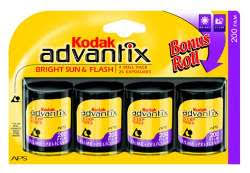
Now, for you to appreciate the facts, I need to tell you something about the APS film! APS stands for Advanced Processing System. Apparently, when the debate was going on as to whether to go digital, Kodak chose to stick to films, but with a digital twist. Thus was born APS. The film records in addition to images, certain parameters for example external lighting, was the flash on, the photo setting – normal, panorama or close up etc. These recordings in the film enable the reproduction of the most appropriate pictures, by changing the developer settings. Naturally for this to be translated, the APS films had to be fed into a special developer machine. No sensible business man would invest in a developer machine unless he has sight of a good volume of APS films. A clear catch 22 situation! In addition to using the information, the machine is also able to deliver an index print. Further, the original spool is returned back with the developed film inside. A very clean set up. Now, what my neighbourhood studio did was plain Jugaad! He went to the dark room, cracked open the APS spool, took out the film and developed it the normal way! Damn, as a customer, I am using an expensive camera and film only to get the same prints as a normal film camera!
Having learned the lesson, I called up the Kodak India office and stated my problem. They said the only known APS film developing studio was in New Delhi (Rama Color Lab, Khan Market) plus perhaps Agra. Since these are the international tourist spots, I guess the place had a number of tourists wanting to develop APS film. For the next few years, I either had the job of developing done through a friend who used to fly to Delhi regularly and later in person on my many trips to Delhi. And I became a big fan of Khan Market, but that is another story!

We had a truly wonderful time, capturing images with the APS film. The camera itself was a hit, wherever I went, as friends and guests used to admire the looks more than its technical prowess. On the technical side, the camera was engineered to perfection. The lens shutter served as the flash, you had two buttons at the top, one to open the lens shutter and the other for the shutter release. The film would wind itself back at the end of 40 exposures, automatically. Before the final click for each exposure one can set the film development pattern , ie panoramic, close up or normal. Quick settings were available for focus as well. There was this nice little LCD display at the back showing the essentials including battery level. And, it had a self timer too, you know the one which delays shutter release by about 10 seconds so that you can be also in the frame! (This was how selfies used to be done in those days). So a great looking camera, took wonderful pictures – but the niggle of getting the film developed remained a problem.
Olympus FE 100 Digital

As time went on, digital cameras started to gain some sort of ascendancy. I was still in love with my Canon IXUS. It was 2006, and shortly after the floods in Chennai, we went to Malaysia. The tour also included a visit to this beautiful island called Langkawi. Beyond the scenic island and the wonderful comfort food at Sheela’s, on our detour to a shopping area we came across this camera shop. The shop keeper was a revelation. Here is our dialogue:
He : Good afternoon, what can I do for you?
I : Just looking! (Sheepish and not wanting to disclose that I am looking for a cheap digital camera, full of features, if such a thing exists)
He : Ok, go ahead
I : (after roaming around a bit) See, I am confused whether I should buy a Canon Digital or be happy with my existing IXUS.
He: Sir, are you a beginner or a professional? How often do you travel and take pictures? Where do you travel?
I : Not sure about that, but I want a digital camera with good features! (and told him about the problem with IXUS film development in India)
He : Sir, I understand. You should go digital. But, I don’t think features are important for you. (He would have rightly guessed that I am an ignoramus with respect to use of cameras). May I suggest a simple camera for you. Easy to operate, and even easier on the pocket. Olympus FE 100. This should be good for your purpose.
And we finally settled for the camera, after some haggling. We bought a small tripod and he threw in a Canon solar powered calculator for free! We never regretted the decision for a very long time.
The FE 100, was compact, no fuss camera. The images, they are digital you see, are stored in memory chip, which has to be transferred to a computer for viewing them. The FE100 became a second cousin to the IXUS.
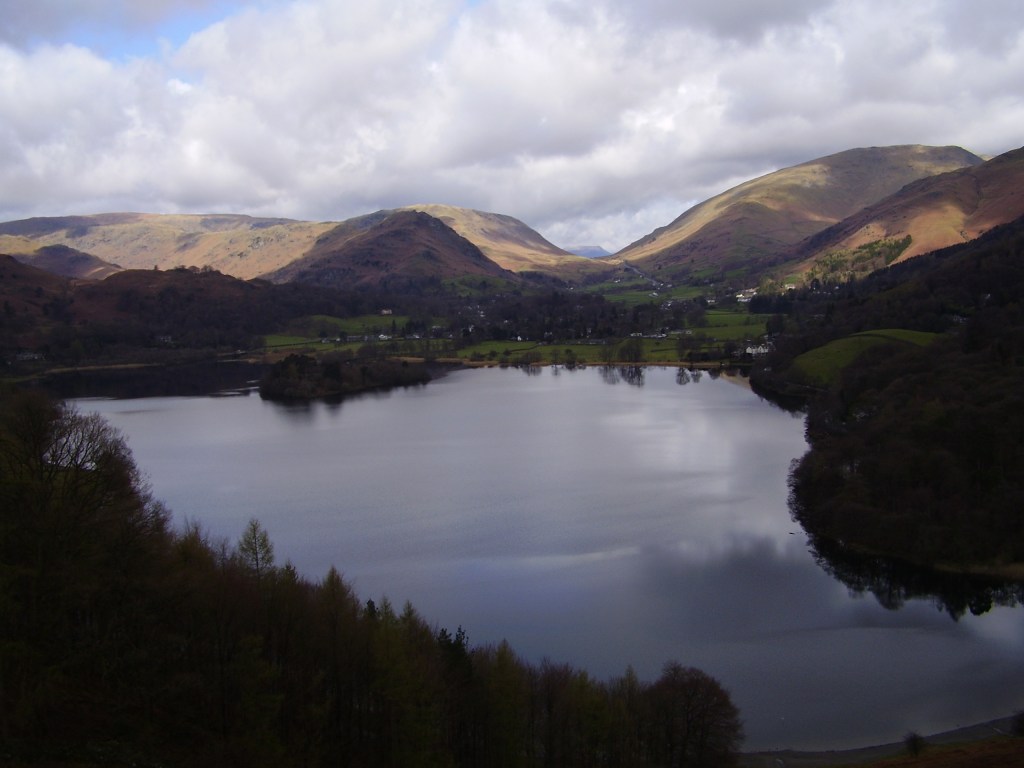
A year later, on a trip to Europe, this little baby became our saviour! Somewhere in Holland, to my dismay, we discovered that the lens cover of the IXUS was jammed. If you use brute force to pull it open, then it refused to shut down, resulting in battery drain. Repair was out of question, and the FE 100 admirably took over the reins. And the only thing we ended up buying was a supplemental Sandisk memory card. So, began our digital journey!
The FE100 was not flashy, will not make a statement, but will do it job very efficiently. It can never be the neighbours envy!
Canon DSLR 400 D
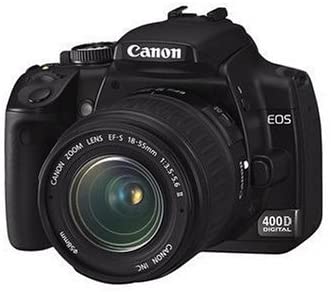
But, once the digital bug was inside you, you start aspiring for the best. Thoughts like ” If I had more control on exposure, my picture would be even better!” “What if I can take close ups in such a way that I can capture the mood better!” “I could have captured the midnight dance better if I had a more powerful flash!”. Features became an obsession and so was the craze to acquire a Digital SLR. Perhaps, the fact that I wanted to show off might have added to the desire quotient.
SLR stands for Single Lens Reflex and these cameras have been around since the photographer went around clicking those wedding photos. In those days, it was not digital, but the concept of able to see what you are going to capture – What You See Is What You Get (through the use of reflecting mirrors) was the essence of the SLR. Once digital took over, the same SLR was converted into digital with the film being replaced by the digital CMOS light capturing and storing mechanism.
I was visiting Singapore a couple of years later (from the time we acquired the FE) and a relative of mine offered to take me to Holland village and to a good camera shop. Honestly, I did not go there to buy, but ended up buying the Canon DSLR D 400. It was bulky! Did my heart swell with pride. No! Was I happy with the features? No idea. But now I have a gizmo which I can carry around like a pro! A feature rich camera!
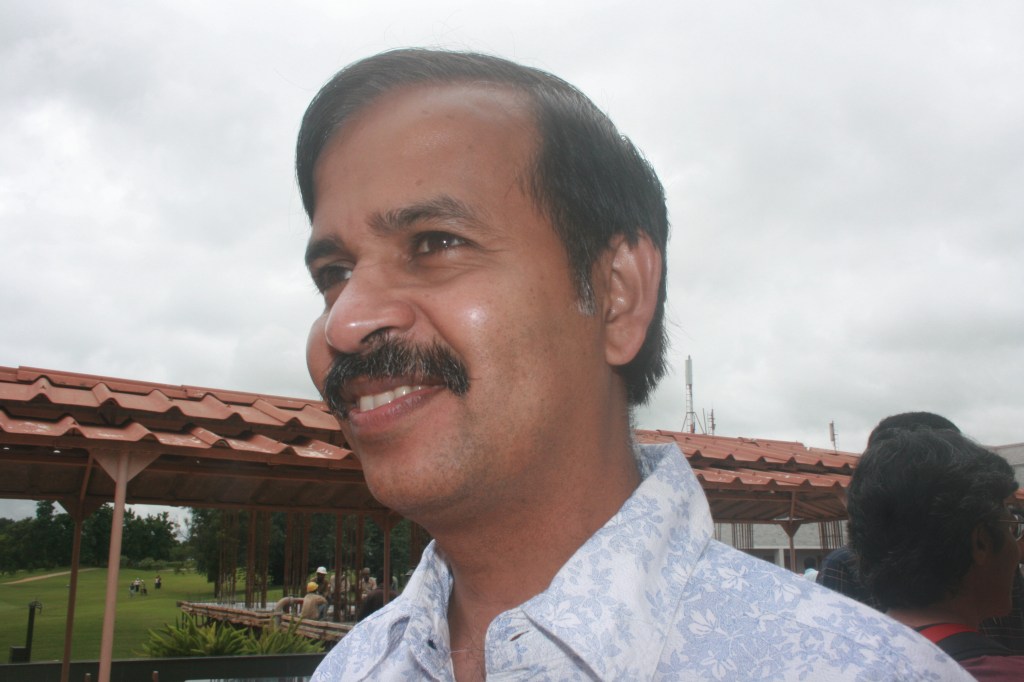

To be honest, barring the need to carry around the sling bag and the time it took to unwrap and be ready, the DSLR took some unbelievable shots. There was a series of close up photos which I did on a couple of occasions, which captured the mood of the subject like never before! The challenge with the EF lens system is that while interchangeability is great, you need to know what kind of lens would you need depending on the situation. The DSLR thus is a tool, but the man (or women) behind the lens has immense power – if you do not know the beans, you can equally end up with a drab outcome. I am not sure, whether it was the input output ratio or general lack of appreciation of camera lingo (Aperture, Focal Length, Exposure, Lighting, ISO etc), I failed to graduate.
Samsung Galaxy S7
What is a mobile phone doing here, you may ask. Well, I can also function as a decent camera, says the Samsung Galaxy S7!
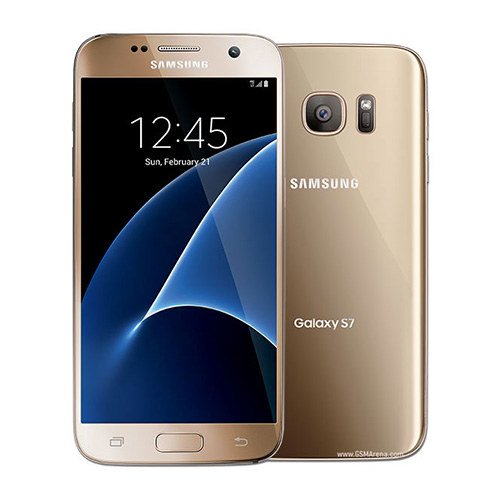
I have started to use the phone as camera only for the last three years. I have always maintained that a product cannot have multiple functionalities. So a phone is for calling and messaging (and not to browse or take photos), a computer is for computation, email and browsing (and not to read a book), a kindle is for reading a book etc. However, with no end in sight to the power of Moore’s law, we now have a beast in our hands.
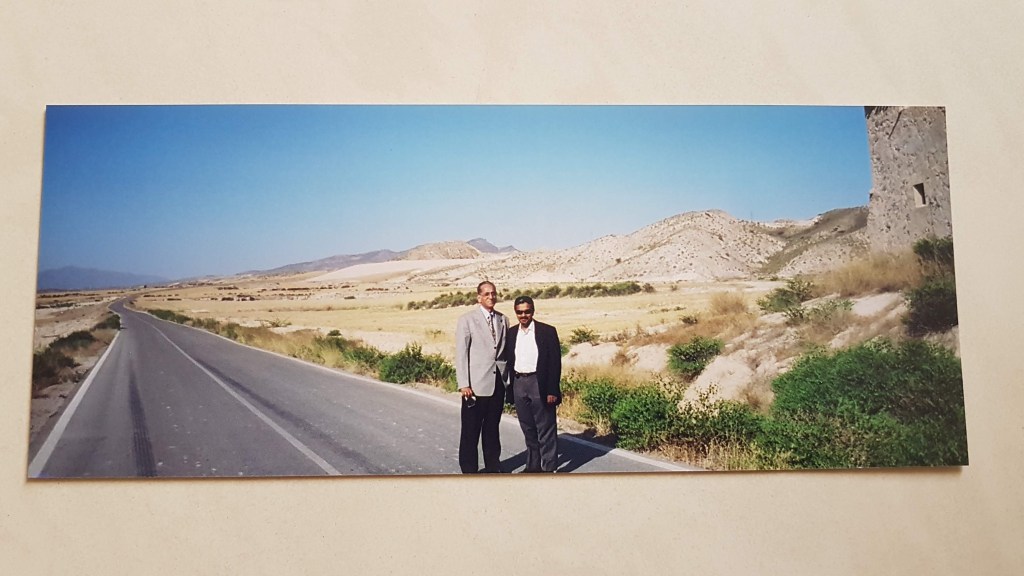
Ease of use, ultimately trumps everything else, for an ordinary consumer. If I have my phone on me and I sense a moment to be filed away for posterity, out comes the phone and the image is automatically stored on the cloud. Rarely has the phone disappointed. So when I say ease of use, it is about capture, storage and retrieval. Now, I guess the DSLRs of the world are only for the professional photo buffs (who I heard are raving about mirror less cameras now!). The irony of it all is that even after three years of use, I have no clue as to the feature set that my phone camera offers. So much for my craze with features! See the pictures below, these are for the naked eye (I mean the untrained eye), as good as an SLR can produce.


Camera Lessons
When I look back, I seem to have lived through the various turning points in the evolution of the camera :
a] the analogue era in black & white, then colour and then analogue with a digital sense ie the APS Advantix film – essentially a Kodak experience, was largely focused on chemistry.
b] the digital era with a basic digital and then a professional digital SLR, where there is blurring of boundaries between optics and electronics.
c] the mobile era, which is more about convenience and ease of use, with decent optics, but electronics seems to dominate.
What are the lessons for life through the lens of a camera, you might ask? I can think of three :
1] Learn to embrace change, move with the times : Camera technology was dominated by Chemistry, then came Optics and now it is clearly a domain of electronics and software (including Photoshop). Change is inevitable. Like the ebb and flow of the tide, some things that dominate today would be gone tomorrow, but replaced by a better instrument (of course, what is better is debatable, is it better for the user and the environment would be a good benchmark). As long as the overall experience is for the better (again!), this is a good thing. The delivery boy of yesterday may not be here today or tomorrow (Eg:Kodak), but someone will be there to serve you for sure. And we see examples of this in many walks of life, like music (walkman to iPod to Alexa). The automobile is a classic example, from horse drawn carriages to now electric vehicles. I am sure you would have heard of the Henry Ford comment, ” If I had asked what people wanted, they would have said faster horses!”.
In essence, things evolve and we are losers if we do not adapt and adopt.
2] Cannot appreciate the good without the bad – We live a comparator life. Whether it is comparing with our previous experience, what we see in our neighbour or an ideal, we judge based on comparison. So anything that we say good or better is with a reference point which automatically is bad in comparison. Ok, what was good yesterday may be bad today, but do thank the bad because it has helped you to evolve. We overcome deficiencies this way, better products are invented this way, our relationships become better this way. Be grateful to bad, because what is good today could be bad tomorrow!
3] Simplicity wins: In general, simplicity in design is an important criteria for product or service success. While the produce may be doing something very complex, how does it interact with the human being will determine its acceptability. A large feature set is relevant for perhaps a few specialised jobs or people, but for the mass a limited feature set wins any day. Simplicity in human interactions is also a key for greater productivity and better relationship. Keep it short, simple and focused!
Articles on the failure of Kodak and Books on Photography
a] Here are two articles which describe the demise of Kodak with somewhat contrasting views. I can say from experience that when your pants are on fire, rational thinking as developed through hindsight, goes out of the window. Some decisions turn out right and others wrong. We may never know the actual truth. The second article could also be biased since it is written by a former leader of the Kodak digital business.
https://www.forbes.com/sites/chunkamui/2012/01/18/how-kodak-failed/#2d02c0896f27
https://www.sloanreview.mit.edu/article/the-real-lessons-from-kodaks-decline/
b] If you are interested in learning the science of photography, reading these two books would give you a great head start. I have a Langford book on 35 mm photography, purchased about 30 years ago. I have not read any of Peterson’s books, but several websites have given a high rating for his book, Understanding Exposure.
– Micheal Langford, Langford’s starting photography
– Bryan Peterson, Understanding exposure
 Anubhavarasa
Wonderful journey about cameras. B/W photos had their own charm. Nostalgia
LikeLike
good good i think the old camera is somewhere here
appa
LikeLike