I live in Chennai and have been using the Chennai airport for a long time now. I have seen it grow from a baby airport, way back in 1987 when only Air India and Indian Airlines used to fly to a more full fledged airport now. And the airport has been in the news due to various reasons (1) How to arrest the declining patronage of airlines including losing out to Bangalore and Hyderabad in the regional race? (2) Should we have a new airport or not and if yes, where? (3) Whether the state run model is best or should we bring in a private operator. There is no debate on whether these questions are important for the people of Tamilnadu and for the industries located in Chennai and its neighbourhood. This article is my take on the current state of Chennai Airport and a possible way forward.
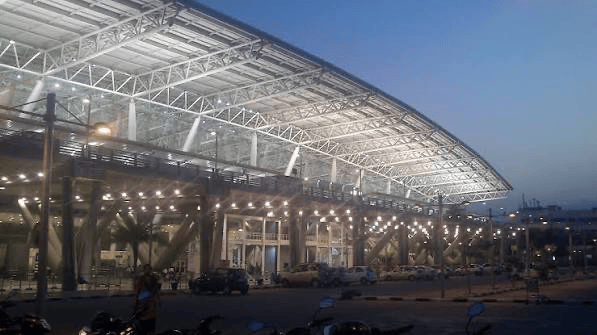
My tryst with airports began in the year 1996 when I was assigned to work with the Tata group in order to guide them in implementing the Bangalore International Airport as a private airport. Tata Group along with Raytheon and Singapore Change Airport was awarded a Letter of Intent by the Government of Karnataka to develop the private airport at Devanahalli. Yes, it is the same same airport that we use in Bangalore, currently operated by BIAL. The focus of my company as a consultant was largely related to commercial aspects of the Project including guiding the commercial agreements, arranging finance and perhaps if found fit to invest in the private airport company.
I was new to understanding airports. While I had an engineering and finance/investment background, understanding the business of airports took up considerable part of my time. This included any published material by the Word Bank or ADB outlining global examples. Kochi International was being developed at the same time. I decided to also visit Kochi and spend a full day with the then Managing Director Mr Kurien, a serving bureaucrat. He was kind enough to help me understand why they are doing what they are doing and even accompanied me on a site visit. Even now, Kochi offers a third model of ownership which is somewhere between a fully private and fully centrally owned airport.
The fact that Tata Group did not end up developing the Bangalore airport is another story. Let us stick to Chennai Airport for the time being, but bear with me as I lead you to the main story through San Diego.
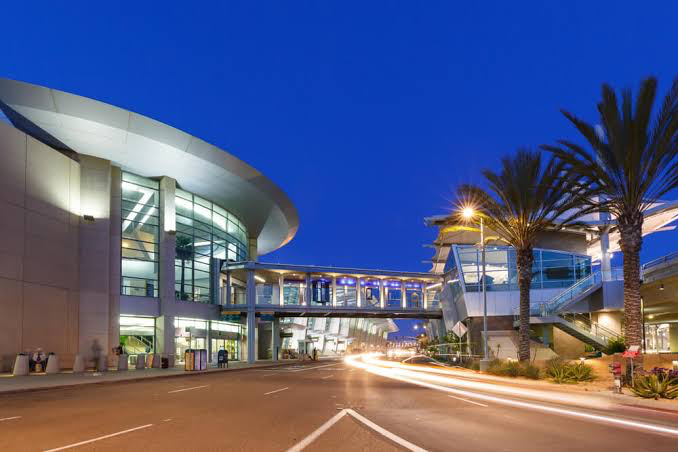
Whenever I am travelling abroad, I am fascinated with the airport that I land in. In addition to how I feel as a customer, I keep an eye on several aspects of the airport. These include the number of terminals, the kind of passengers that the airport handles, the ownership and what the locals think of the airport itself. In my recent trip to the USA, I happened to be in the city of San Diego. As you know San Diego is on the western coast and is almost abutting Mexico. When I landed, I felt a distinctive similarity to Chennai in that it was an airport in the city, the only one serving the neighbourhood and most importantly had only one runway. Only one operating runway! I was curious and then used some of the LLMs to educate me on San Diego airport and its comparison to Chennai! Here is what I found:
Airport Comparison
| Chennai (MAA) | San Diego (SAN) | |
| Annual Passengers | 23 million | 25 million |
| Annual Cargo | 450,000 MT | 90,000 MT |
| Daily Aircraft Movements | 400 to 450 | 500 to 600 |
| # of Runways | Two intersecting | One primary |
| # of Terminals | Four | Two |
| Land Area | 1300 acres | 660 acres |
| # of Aerobridges | 14 | 54 |
What stands out for me in the above comparison is that if you leave aside the cargo operations, San Diego airport is very efficient in all aspects. It operates on one runway, has only about half the land area and has higher aircraft movements. It achieves this with only two terminals on the passenger side! Please also remember that Chennai is more international than San Diego as it is the major east coast airports in South India. This means that there are larger planes landing at Chennai compared to San Diego (explained by the higher aircraft movements for the same number of annual passengers). So why is Chennai not as efficient? Here are some possible answers:
[1] MAA design is very linear in the sense that all the terminals are stacked in a single line and so are the aerobridges. SAN on the other hand adopts a classical central core and pier design with many aerobridges. SAN is a winner when it comes to airport design in general. See this link.
[2] MAA for its land size has access only from south east side for both cargo and passengers. This creates congestion for vehicular traffic and coupled with the linear airport design probably limits passenger evacuation capability.
[3] I am guessing also that the avionics deployed at SAN is of a much higher order enabling it to handle larger aircraft movements from a single runway. In addition, MAA has a diversity of aircrafts from turbo props to larger long haul aircrafts requiring spacing out constraints.
[4] While Chennai has two runways, the second runway operations are not directly connected to the terminal buildings requiring a long taxi time. There seems to be a recent development to create a new terminal building between the two intersecting runways. It remains to be seen whether this can improve aircraft and passenger movements.
In summary, it all points to how airports need to be designed. Everything from aircraft movements to their docking to passenger movements within the terminal and finally to their efficient evacuation on the land side has to be tightly integrated. It is like a factory system and a bottleneck in one would become the limiting factor in the entire system. I am not sure whether the current airport operator or the local government has engaged with an an airport design agency of repute to study this problem and suggest alternatives. See this link for some more inputs on the San Diego airport redesign
Ownership
Now that we have some understanding of the constraint from a design perspective, let us also look at ownership structure between MAA and SAN.
MAA is owned and operated by Airport Authority of India (AAI), a central government agency. AAI while responsible for the airport itself would depend on the local state government for issues relating to land acquisition/expansion and land side operations. Since AAI operates a large number of airports in the country, the revenues from Chennai will be used to cross subsidise other airport developments in the country. Chennai is the second most profitable airport for AAI, with Kolkatta being the highest.
SAN on the other hand is operated by the San Diego Country Regional Airport Authority, an independent agency created under state law. What this structure means is that the airport is self funded, all decisions are localised and it operates keeping in mind the interest of the San Diego district. SAN is not a private airport like Bangalore or Hyderabad, but in structure operates like one balancing cash flows as well as local district requirements. In that sense we can say that SAN is closer to Kochi International Airport in terms of ownership structure.
A decentralised ownership structure, with a significant stake by the local government enhances the autonomy and provides a base for prioritising local interests over others. However, with no capability to manage airport operations at the state level, it is important to recruit managers with professional airport experience under a clear governance framework for this model to succeed.
Way forward for MAA
While the hope of a new green field airport has been blowing hot and cold since 2007, here are two immediate steps that the local government and AAI can take together:
[1] Understand what needs to be done to make the airport an efficient conveyer and based on this design plan investments on both airside and land side. The designer should understand what makes single runway giants like SAN or Lisbon or even Mumbai with respect to their operating efficiency.
[2] If privatisation of the airport is not an option, create an ownership structure where the state government has a significant ownership and say in how the airport needs to be operated including ring fencing all revenues and expenses of the airport. This work should ideally precede the investment phase of a new version of MAA in the existing location
Hopefully, this can extend the longevity of the existing site at MAA by another ten years or so.This gives a breather for locating a new airport in the most appropriate location.

